Resident Curator
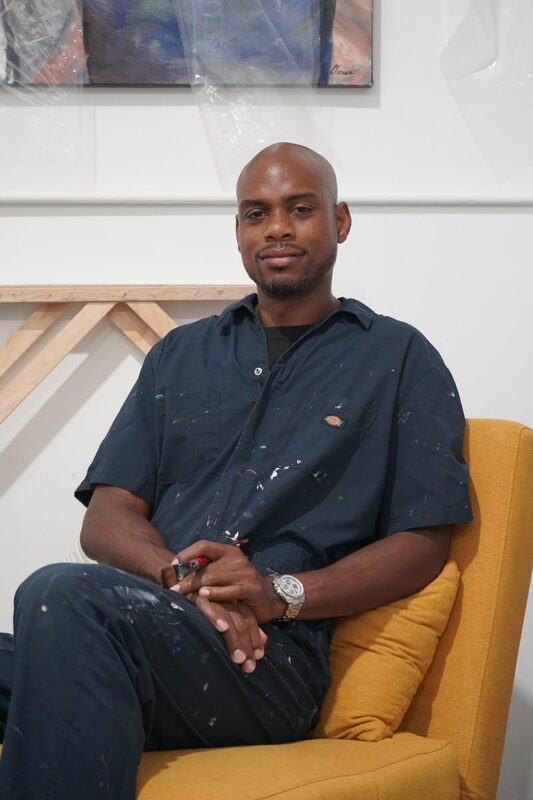
Omari Booker
Omari Booker is a visual artist based in Los Angeles, CA, and Nashville, TN. While oil painting is his primary medium, Omari also incorporates mixed media—such as charcoal, ink, and found objects—into his work, using these elements to create dynamic, finished pieces.
As the inaugural Resident Curator for the 30th Annual Exhibition of Artists in Michigan Prisons, Omari played a vital role in curating the exhibition. His responsibilities included selecting artwork, engaging with artists, designing gallery layouts, and sharing his expertise with University of Michigan students, faculty, and community members. Omari observed that the works of PCAP artists powerfully reflected themes central to his own creative philosophy, including connection, peace, gratitude, and consistency.
The images, stories, and conversations of PCAP artists inspired Omari’s unique curation of his own work, which is displayed alongside PCAP’s pieces in the Duderstadt Gallery. Below you can see images of his work alongside his artist statement.
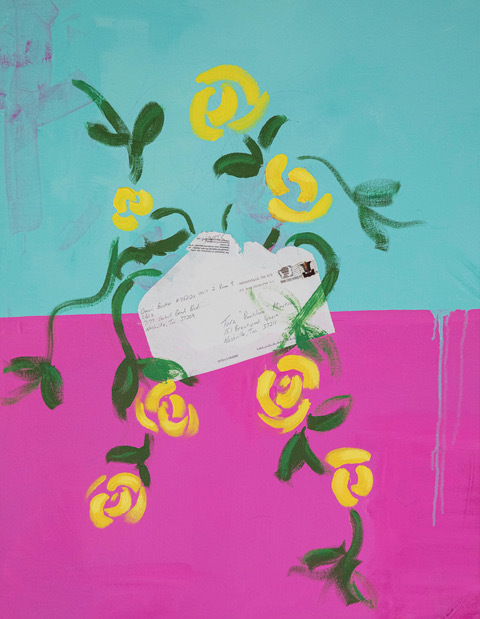
"Dmnitiluvu," Omari Booker
Artist Statement
By: Omari Booker
While working with PCAP artists I explored the intersection of art making, liberation, and therapeutic healing. I noticed many of the themes that inspire my work were evident in the work of PCAP artists. As the resident curator I highlighted the creativity, consistency, and process that PCAP artists exemplified. The stories of the artists are incredibly inspiring. The artwork is a strong addition to the contemporary creative landscape. Adverse circumstances and adversity are a part of the artists stories, but do not define or separate their work from their contemporaries. My goal, along with the University Of Michigan students, faculty, and PCAP community, is to highlight the incredible artists and artwork created in Michigan prisons. A specific body of my personal work is also in conversation with the works of the PCAP artists. Connection, peace, gratitude, and consistency are recurring themes in my work and life. The philosophy that undergirds my work is FREEDOM THROUGH ART, and I aspire to create work that communicates to the viewer their unique and intrinsic ability to be free.
PCAP (Prison Creative Arts Project) artists exemplify creativity, consistency, and gratitude. During my visits to Michigan prisons I received the gift of spending time with incarcerated artists who are making powerful work, and without exception, they exhibited these three qualities. Their images, stories, and conversations inspired a unique curation of my own work. PCAP artists consistently make beautiful work in the midst of adverse circumstances and express gratitude for the opportunity to do so. The artwork is informed by their surroundings, but not limited by them.
I could not create the art that I make without my life experiences. Those experiences, which includes incarceration, do not set my work apart from the conversations that most contemporary artists are having. My experiences give contexts for what inspires my artwork and why I make it. The same is true for PCAP artists making work through the lens of a very unique perspective. My work has consistently been inspired by freedom as I was literally denied freedom through the experience of incarceration and 12 years on parole. I’ve found liberation to be a universal desire.
In the works included from two recent series, “Fifteen” and “Be”, I’m dealing with the ideas of freedom, hope, joy, and presence. In, “Dmnitiluvu”, translated, Damn it I love you, I have repurposed a letter, given to me by my partner 16 years ago during the first year of my incarceration. The hope and life that letters inject into the life of an incarcerated person are extremely important to them. While visiting MDOC institutions I saw this expressed through cards, gifts, and objects made specifically for loved ones to express their gratitude for those on the outside who hadn’t forgotten their loved ones on the inside. The inclusion of “Dmnitiluvu” is in conversation with work selected by PCAP artists. The physical letter that I received is collaged with a painting. While incarcerated, painting, drawing, and writing were a source of freedom. I saw that as a common thread between myself and the PCAP artists.
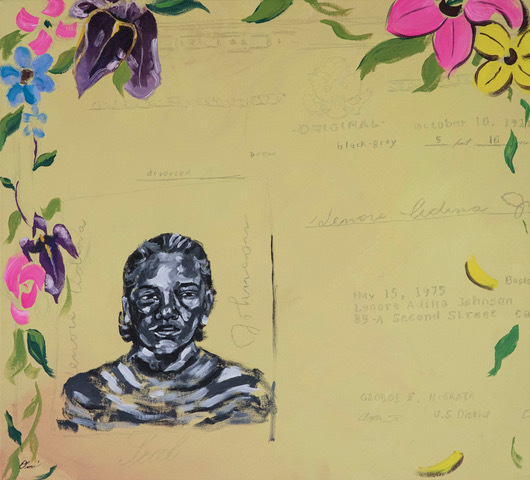
"Home," Omari Booker
“Home” honors my Grandmother. She migrated to the United States from Trinidad in 1967. My grandmother was a primary caregiver along with my parents. Granga, the name given to her by my Sister Damali, her first grandchild, lived in our home and helped my parents raise my sister and me. ‘Granga’ passed away the day that I was released from prison. I connected with the PCAP artists around the losses that are always a part of incarceration.
On January 31, 2013, I was scheduled to be released from Charles Bass Correctional Complex. I had done 3.5 years of a 15 year prison sentence and I had made parole. In the early stages of my incarceration, ‘Granga’ visited, but she wasn’t doing well by the time I was up for release, she was 91 by then. That morning I was so grateful that I would see her again. She had hung on and lived to see me released. As I was ‘arriving’, she was saying goodbye. ‘Granga’ passed around 7 am while I was being processed, and the first words I heard when I got in the car were, “She didn’t make it.”
Whether loss comes through losing time with a loved one, or the death of a loved one, being removed from society separates families. Though I eventually found gratitude in the timing of my grandmother’s death, it was a heartbreaking way to come home.
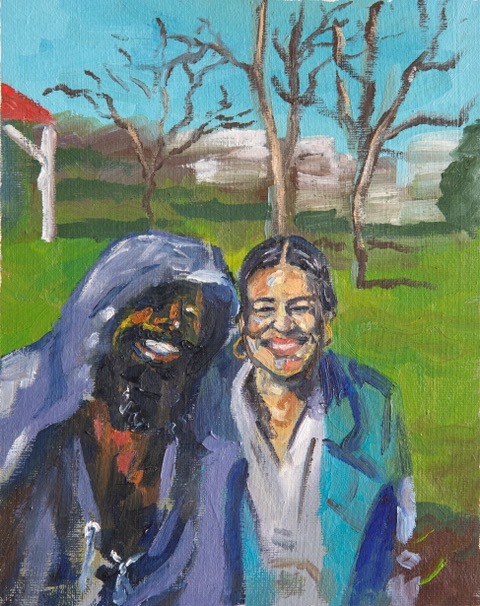
"Polaroid," Omari Booker
I’ve made a significant body of work related to my experience of incarceration, but that was not where my worked remained. The ideas around hope, presence, and freedom have been consistent focal points and eventually my attention moved to my environment at home.
When I met B, the focus of my latest series, I was instantly drawn to him as a subject. As our friendship grew more and more work was produced that he inspired.
B lives outside in my hometown of Nashville, TN. My partner, Tara Booker, met and later introduced me to B. We befriended him, and I began making work inspired by him. He lives outside so he is an accessible subject, but that was not the reason that I continued to make the body of work. Our friendship, and his ability to thrive in his circumstances gave me a new lens through which to investigate freedom. I found that the freedom that I find through my creative practice is akin to the freedom he finds in his life outside.
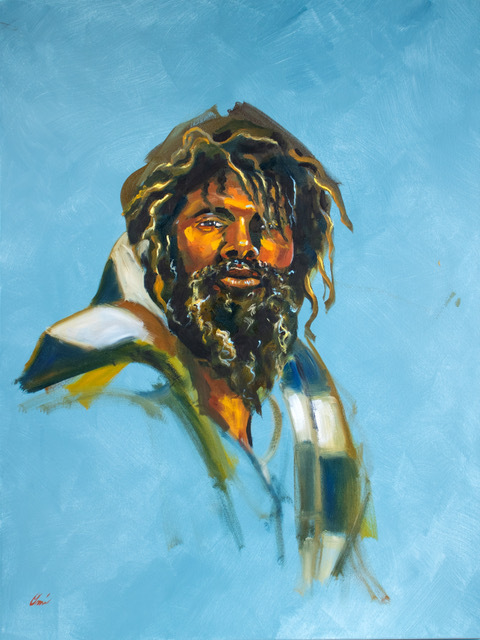
"Be," Omari Booker
B endures winters, food insecurity, and life without the trappings of traditional society. He also has liberated himself from the traps that often come with “progress” and “privilege”. He is very content with his circumstances. His peace, serenity, and freedom made him a great friend to talk to. His look is also striking, and I eventually made nearly 40 pieces inspired by him.
I was over 10 years removed from physical incarceration when I began making artwork inspired by B. I titled the solo exhibit “Be". The ability to be present, be still, be content, and be free inspired the work. B embodied what I was seeking through my creative practice. I noticed how PCAP artists payed attention to their environment and drew inspiration from sources of freedom. Wildlife, nature, and pieces made with found objects are recurring themes in their work. Many artists also made work that reference the institution, their most consistent physical environment.
The artists who I met while visiting PCAP programs have experienced many of the loses that drew me to B. Art has a therapeutic impact on the life of incarcerated people. Many of the works include nature, family, and freedom. The gratitude for the freedom that art affords is intensified in communities where freedom is scarce.